Table of Contents
Key Takeaways
- Maximizing storage in small spaces requires thinking vertically and using multi-functional furniture that serves two or more purposes
- Floating shelves, tall bookcases, and wall-mounted organizers make use of vertical space without consuming valuable floor area
- Hidden storage in ottomans, platform beds, and coffee tables doubles usable space without making rooms feel cluttered
- Room-by-room storage planning ensures each space addresses its unique challenges while maintaining a cohesive organizational approach
- The key to small space living is editing ruthlessly: every item must earn its place, and everything must have a designated home
The Philosophy of Small Space Living
Living well in a small space requires a fundamental shift in how you think about possessions and space. In larger homes, storage is often an afterthought: extra rooms, basements, and garages absorb overflow without conscious planning. In small spaces, every square inch must be intentional. The philosophy of small space living starts with the principle that space is a premium resource and every item you bring into your home consumes both physical space and mental energy. Before implementing any storage solution, edit your possessions ruthlessly. If you have not used something in the past year, it does not need to occupy valuable space in your home.
The most successful small space dwellers adopt a minimalist mindset without necessarily becoming minimalists. They focus on quality over quantity, choosing fewer but better items that serve their purpose effectively and earn their place in the home. They prioritize multi-functional items: a dining table that works as a desk, a sofa that converts to a guest bed, storage ottomans that provide seating and organization. They understand that organization is not about finding creative ways to store more stuff but about creating a comfortable, functional living environment with only what genuinely adds value to their lives.
Vertical thinking is the foundation of small space organization. Most homes have ample unused vertical space from the floor to the ceiling, yet most storage solutions only use the lower 4 to 5 feet. Wall space between windows, above doorways, and in corners represents significant storage potential. According to the Wikipedia article on small houses, the tiny house movement has popularized many creative storage solutions that apply to any small space, from magnetic wall strips for kitchen tools to fold-down tables that disappear when not needed.
Living Room Storage Solutions
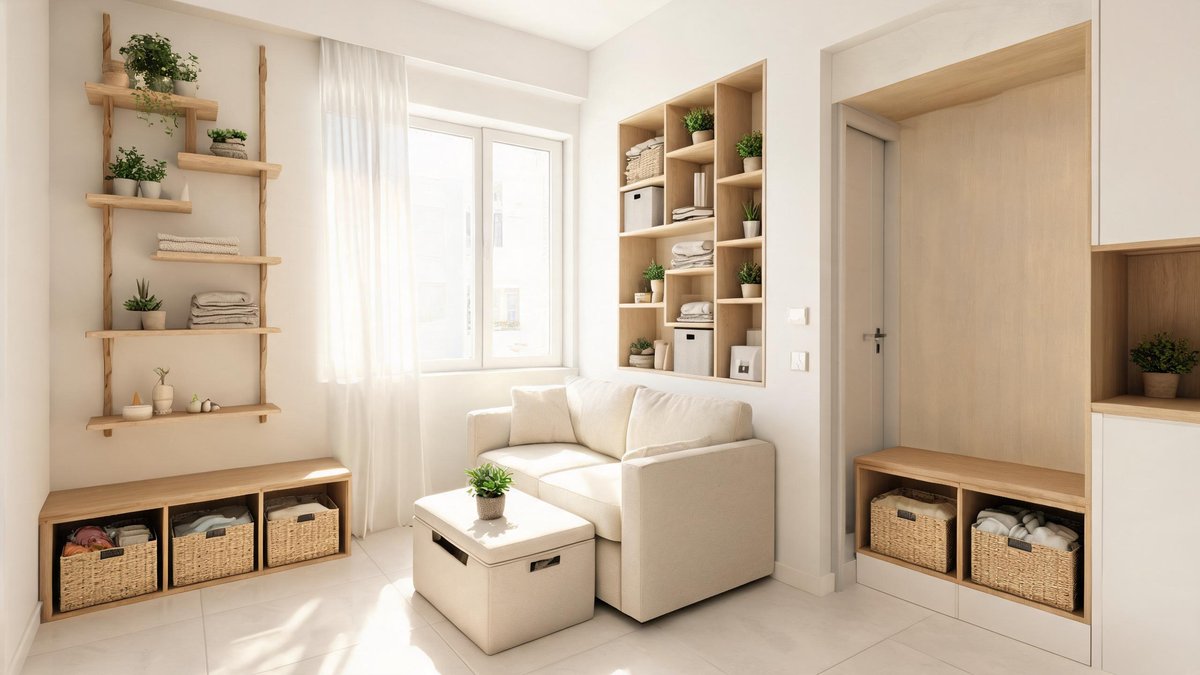
The living room is typically the largest room in a small home but also serves the most functions: entertaining, relaxing, working, eating, and sometimes sleeping. Multi-functional furniture is essential here. Choose a sofa with built-in storage underneath the seats for blankets, board games, and out-of-season items. A coffee table with a lift-top reveals hidden storage for remotes, magazines, and laptop accessories while providing a workspace at sitting height. Nesting tables provide surface area when needed and tuck away when not, occupying the same footprint as a single table.
Wall-mounted shelving is the most effective way to add storage without sacrificing floor space. Install floating shelves above the sofa for books, plants, and decorative items. Floating media consoles keep electronics off the floor and provide concealed storage for cables and accessories. Corner shelves utilize dead space where walls meet. Tall bookcases or shelving units that extend to the ceiling draw the eye upward, making the room feel larger while providing extensive storage. Store less frequently used items on upper shelves and daily essentials within easy reach.
Hidden storage opportunities abound in living rooms. Ottoman storage cubes serve as seating, footrests, and coffee tables while hiding blankets, magazines, and electronics inside. A storage bench along a wall provides seating and houses shoes, bags, or sports equipment. Decorative baskets on open shelves conceal smaller items while maintaining visual appeal. Window seats with hinged tops provide comfortable seating and hidden storage for items that do not need frequent access.
Kitchen Organization for Compact Spaces
Kitchens in small homes present unique storage challenges because they must store many specialized tools, ingredients, and appliances in a limited area. The most effective small kitchen strategy is to edit down to the essentials. Most home cooks use only 20 percent of their kitchen tools regularly. Store or donate the specialized gadgets you use once a year. Keep countertops as clear as possible: each small appliance that lives on the counter reduces your usable workspace. If you use a coffee maker daily, it earns counter space. If you use a bread maker twice a year, it belongs in a cabinet.
Vertical storage solutions transform small kitchens. Install a magnetic knife strip on the wall to free drawer space and keep knives visible and accessible. Wall-mounted pot racks store cookware within reach while clearing cabinet space. Pegboard systems on empty wall space provide customizable storage for pots, pans, utensils, and cutting boards. Inside cabinets, tension rods create vertical dividers for baking sheets, cutting boards, and cooling racks. Cabinet door organizers hold spices, measuring spoons, and foil wraps. Stackable shelf risers double the usable space inside standard cabinets.
Pantry organization is critical in small kitchens. Use clear, uniform containers for dry goods like flour, sugar, pasta, and cereals. Clear containers let you see contents at a glance and stack more efficiently than original packaging. Label everything with contents and expiration dates. Use tiered shelves for cans and jars so nothing gets lost behind other items. A door-mounted spice rack or magnetic spice containers on the refrigerator keep spices accessible without taking shelf space. Lazy Susans in corner cabinets make deep cabinets accessible and prevent items from disappearing into the back.
Bedroom and Closet Storage Hacks
The bedroom needs to feel calm and restful, which means storage solutions must keep clutter out of sight while maintaining easy access to daily essentials. The bed itself offers the greatest storage opportunity in most bedrooms. Platform beds with built-in drawers eliminate the need for a separate dresser and provide extensive storage for clothing, bedding, and out-of-season items. Under-bed storage containers on wheels slide in and out easily and hold shoes, extra linens, or off-season clothing. Bed risers add 6 to 12 inches of under-bed clearance for taller storage containers.
Closet organization in small spaces requires maximizing every inch of available space. Install a second hanging rod below the existing one to double vertical hanging space for shirts, pants, and skirts. Use shelf dividers to keep stacked items organized and prevent toppling. Add hooks on interior closet doors for robes, bags, belts, and scarves. Use the top shelf for items you access less frequently: seasonal decorations, travel luggage, or sentimental keepsakes. Slim velvet hangers save roughly 2 inches per garment compared to standard plastic or wood hangers, adding significant capacity to a small closet.
Wall-mounted storage solutions keep the floor clear in small bedrooms. Floating shelves beside the bed replace bulky nightstands and provide space for books, glasses, and a phone. Wall-mounted reading lights eliminate the need for table lamps that take up surface space. A wall-mounted folding desk provides a compact workspace that folds flat against the wall when not in use. Over-the-door shoe organizers store not only shoes but also accessories, toiletries, and cleaning supplies, using space that would otherwise go unused.
Bathroom Storage in Tight Quarters
Bathrooms are typically the smallest rooms in any home yet must store a surprising variety of items: towels, toiletries, medications, cleaning supplies, and grooming tools. Vertical storage is particularly valuable in bathrooms because floor space is almost always limited. Over-the-toilet shelving units add several shelves in a space that is otherwise unused. Wall-mounted cabinets with mirrored doors provide concealed storage while serving as a mirror. Tension rod systems inside shower enclosures hold caddies for shampoo, conditioner, and body wash without drilling holes.
Drawer and cabinet organization maximizes the limited storage available in bathroom vanities. Use drawer dividers to separate makeup, dental supplies, grooming tools, and first-aid items. Clear acrylic organizers keep contents visible and accessible. Stackable bins on cabinet shelves double vertical space and make it easier to access items at the back. Under-sink storage can be challenging due to plumbing, but tension rod systems designed specifically for this space hold cleaning supplies and extra toiletries. Slide-out drawers or baskets make deep cabinets much more functional.
Magnetic strips on bathroom walls offer creative storage solutions. A magnetic strip inside a cabinet door holds tweezers, nail clippers, scissors, and bobby pins. A strip on the wall near the sink holds metal grooming tools within easy reach. Over-door hooks provide additional towel storage without taking up wall or floor space. Use a tiered stand or turntable for cosmetics and daily products so everything is visible and accessible. Keep only daily essentials on the countertop and store everything else behind closed doors for a clean, spa-like bathroom appearance.
Home Office and Entryway Storage
Home offices in small spaces present the challenge of storing paper, electronics, and office supplies without creating visual clutter. Go digital wherever possible to eliminate paper storage needs. Scan important documents and store them in organized cloud folders, keeping only essential physical documents in a single, compact filing cabinet. Use vertical file organizers on desks rather than horizontal piles. Wall-mounted shelving above the desk provides storage for reference books and supplies without taking desk space. Cable management solutions like adhesive clips and cable sleeves keep wires organized and out of sight.
The entryway is the first space you see when entering your home and sets the tone for the entire living space. A well-organized entryway prevents coats, bags, shoes, and mail from spreading throughout the home. A slim console table with drawers or baskets provides a landing zone for keys, wallets, and mail. Wall hooks at different heights accommodate coats, bags, and umbrellas for every household member. A narrow bench with shoe storage underneath provides a place to sit while putting on or removing shoes. Mail sorting is essential: create a simple system for incoming mail with a recycling bin for junk, a tray for bills to pay, and a designated spot for items to keep.
Small entryways benefit from creative vertical solutions. Over-door hooks or a wall-mounted coat rack uses wall space rather than floor space. A slim shoe cabinet or over-the-door shoe organizer keeps footwear contained and out of sight. A wall-mounted key holder with small shelves provides a designated spot for daily essentials. If space allows, a small basket or tray on the console table catches pocket contents like coins, receipts, and small electronics at the end of each day. These small organizational touches prevent the entryway from becoming a dumping ground and create a calm, welcoming transition into your home.