Table of Contents
2. Install Peel-and-Stick Wallpaper ($50–$90)
Today's peel-and-stick wallpapers are a far cry from the tacky varieties of decades past. They're thick, forgiving, and available in stunning patterns. Apply them to a small powder room, a closet interior, or as a backsplash alternative. A single roll (roughly 28 sq ft) starts around $30. Measure twice and order from the same dye lot to avoid color mismatch. Budget: $50–90. Difficulty: Easy
3. Refresh Cabinets with Paint ($75–$100)
Kitchen or bathroom cabinets looking dated? A coat of paint works wonders. You'll need deglosser or sandpaper for prep ($8), bonding primer ($20), and cabinet-grade paint ($35). Don't skip the primer — it's the difference between a finish that lasts five years and one that chips in five weeks. Remove doors and hardware, work in a well-ventilated area, and apply two thin coats rather than one thick one. Budget: $75–100. Difficulty: Medium
Hardware & Fixtures: Small Details, Big Difference
4. Upgrade Cabinet Hardware ($25–$60)
Swapping dated knobs and pulls is possibly the highest-impact, lowest-effort update in existence. Modern brushed brass, matte black, or brushed nickel hardware instantly signals "updated." Most standard cabinets use 3-inch center-to-center spacing. Count your cabinets first, then shop accordingly — packs of 10–25 knobs offer the best value. Budget: $25–60. Difficulty: Easy
5. Replace Light Switch and Outlet Covers ($15–$30)
Yellowed plastic switch plates scream neglect. Crisp new covers — especially screwless "snap-on" styles — cost just a few dollars each and take seconds to install. For extra credit, swap old toggle switches for modern rocker or dimmer switches ($5–20 each). Always turn off the breaker first. Budget: $15–30. Difficulty: Easy
6. Install a New Faucet ($60–$100)
A sleek new kitchen or bathroom faucet changes the entire look of a sink area. Many models under $100 offer pull-down sprayers, single-handle operation, and spot-resistant finishes. You'll need an adjustable wrench, plumber's tape ($2), and possibly a basin wrench ($15) for tight spaces. Most faucets come with clear instructions. Budget: $60–100. Difficulty: Medium
Organization & Storage: Tame the Chaos
7. Install Floating Shelves ($30–$70)
Floating shelves add storage and display space without consuming floor area. Basic wood boards (1x8 or 1x10 pine) cost $10–20 each. Sand, stain or paint, then mount on sturdy brackets or a floating-shelf hardware kit ($15–25). Install into wall studs for strength — a stud finder ($15) is essential here. Budget: $30–70. Difficulty: Medium
8. Build Closet Organizer Systems ($50–$100)
Wire shelving systems or modular closet kits transform chaotic closets into efficient storage zones. Brands like Rubbermaid and ClosetMaid offer configurations starting around $50. Before buying, empty the closet entirely, measure precisely, and sketch your ideal layout — double-hang sections for shirts, long-hang for dresses, and cubbies for shoes. Budget: $50–100. Difficulty: Medium
9. Create a Pegboard Wall Organizer ($30–$60)
Pegboard is the unsung hero of garage, laundry room, and craft room organization. A 4x4 sheet costs under $25. Paint it in a color that complements your space, frame it with 1x2 trim strips for a polished look, and stock up on peg hooks and baskets ($10–20). Use a spacer system (even wine corks work) to create the gap needed behind the pegboard. Budget: $30–60. Difficulty: Easy
Outdoor & Curb Appeal: First Impressions Count
10. Paint Your Front Door ($30–$50)
A freshly painted front door in a bold color — deep navy, forest green, or warm terracotta — creates instant curb appeal. You'll need exterior-grade paint ($25), a quality angled brush ($10), and painter's tape. Remove the door if possible for the cleanest result; otherwise, work carefully around hardware with tape. Budget: $30–50. Difficulty: Easy
11. Install Solar Path Lights ($40–$80)
Solar-powered landscape lights require zero wiring and automatically illuminate walkways at dusk. Sets of 6–10 lights start at $35 on major retail sites. Look for models with replaceable batteries and at least 10 lumens per light — anything dimmer is purely decorative. Space them 6–8 feet apart for even illumination. Budget: $40–80. Difficulty: Easy
12. Build a Raised Garden Bed ($50–$90)
A 4x4-foot raised bed made from cedar or untreated pine costs $50–90 in materials: four 2x6 boards for the sides, 2x2 corner posts, and deck screws. Avoid pressure-treated wood near edible plants. Line the bottom with cardboard to suppress weeds, and fill with a 50/50 mix of topsoil and compost. Budget: $50–90. Difficulty: Medium
Decor & Finishing Touches: The Details That Matter
13. Create a Gallery Wall ($30–$70)
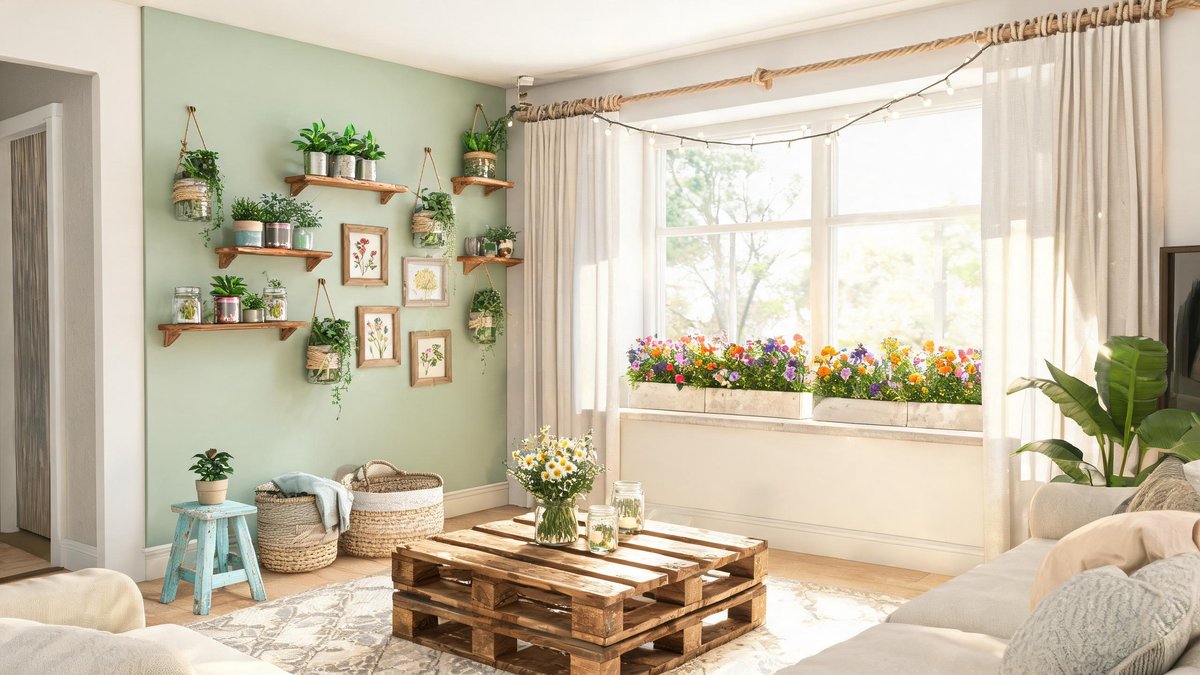
A well-curated gallery wall transforms a blank expanse into a personal statement. Source frames from thrift stores ($2–8 each) and fill them with printable art ($0–5 from Etsy), your own photography, or pressed botanicals. Lay everything out on the floor first to experiment with arrangement before committing nails to wall. Budget: $30–70. Difficulty: Easy
14. Install Crown Molding (Small Room: $50–$90)
Crown molding adds architectural gravitas to any room. For a small room (roughly 10x12 feet), you'll need 5–6 lengths of MDF or polyurethane molding ($8–15 per 8-foot piece), a miter box ($15), construction adhesive, and finishing nails. Pre-primed MDF molding is the most forgiving for beginners. Budget: $50–90. Difficulty: Hard
15. Upgrade Window Treatments ($40–$90)
Swapping mini-blinds for woven shades or linen curtains softens a room instantly. For budget options, check big-box stores' in-stock curtain panels ($15–25 per panel) paired with a basic rod ($10–20). Mount the rod 4–6 inches above the window frame and extend it 3–4 inches beyond each side — this tricks the eye into perceiving larger windows. Budget: $40–90. Difficulty: Easy
Getting Started: The Real Secret to DIY Success
The projects above share a common thread: they reward planning far more than they penalize inexperience. Before you pick up a paintbrush or drill, spend an hour watching a tutorial or two on YouTube, assemble all your materials, and clear your workspace. A $100 budget goes furthest when you're not making emergency trips to the hardware store for forgotten supplies.
Also, don't underestimate the power of incremental wins. If tackling all 15 feels overwhelming, choose just one project for this weekend. That single accent wall or new faucet may spark the momentum that carries you through the rest of the list. DIY isn't about perfection — it's about making your space feel more like home, one small project at a time.
Successful DIY projects share a common foundation: proper planning prevents poor performance. Before cutting any material or opening a paint can, take time to measure your space carefully, create a detailed materials list, and watch a few tutorial videos specific to your project. The most common DIY mistakes -- misaligned cuts, color mismatches, and insufficient materials -- all trace back to inadequate preparation. Create a budget that includes a 15 percent contingency for unexpected supplies or mistakes. Clear your workspace entirely before starting and lay out all tools and materials within easy reach. This preparation phase may feel tedious, but it separates professional-quality results from the frustrating outcomes that discourage people from tackling future projects.
Gardening connects you with the natural world in a way that few other home activities can match, and the benefits extend well beyond fresh produce or beautiful flowers. Working with soil exposes you to beneficial microorganisms that can boost your immune system and improve mood through direct contact with Mycobacterium vaccae, a natural antidepressant found in garden soil. Start small to avoid overwhelm -- a single raised bed or a collection of containers on a patio is plenty for a first season. Choose plants that match your local climate and sunlight conditions rather than fighting nature by trying to grow Mediterranean herbs in a shady damp yard. The most successful gardeners are those who work with their environment rather than against it, selecting varieties naturally suited to their specific conditions.
Interior design principles are surprisingly simple once you understand the basic framework that professionals use. The golden ratio of 60-30-40 applies to color distribution: 60 percent of a room should be a dominant neutral color, 30 percent a secondary color, and 10 percent an accent color used sparingly in accessories and artwork. Balance in furniture arrangement does not mean symmetry; visual weight can be distributed asymmetrically for a more dynamic and lived-in feel. Lighting should come from three sources -- ambient overhead lighting, task lighting for specific activities, and accent lighting to highlight architectural features or art. The most common decorating mistake is purchasing furniture that is too small for the space. When in doubt, size up, as oversized furniture creates a more intentional and luxurious feel than undersized pieces that leave a room looking sparse and unplanned.