Table of Contents
Layer Your Light Sources to End Dim Zones
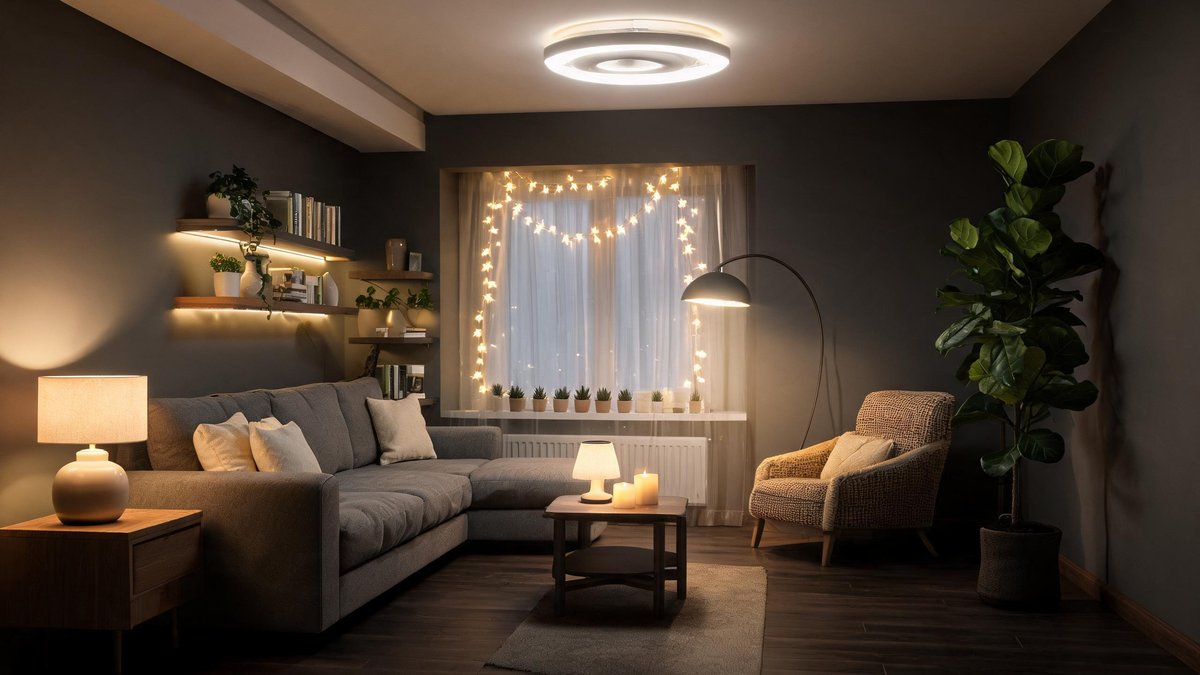
A single ceiling fixture casts harsh shadows and leaves corners in murky gloom. You need multiple light types working together to wash walls, highlight textures, and fill every nook. Lighting design studies show that layering ambient, task, and accent fixtures can lift perceived brightness by up to 30 percent without adding extra wattage. Start with a soft overhead glow on a dimmer, then position a floor lamp behind your reading chair and clip a small task light onto a bookshelf. Add an accent light aimed at a floor plant or artwork. The mix erases flat, cave-like spots and makes the room feel taller and deeper.
Your takeaway is simple: never rely on one light source. In a dark 12-by-15-foot living room, try three layers. Use a semi-flush mount ceiling light with a 2,700-lumen LED, a 1,600-lumen torchiere in the far corner, and two 450-lumen picture lights over a gallery wall. The staggered illumination tricks your eye into reading the space as brighter, even on overcast days.
Place Mirrors to Double Every Ray of Natural Light
Mirrors don't just reflect your outfit—they bounce daylight deep into a room. When you hang a large mirror directly across from a window, the glass catches incoming sun and flings it onto opposing walls and furniture. Research from the Building Technologies Office suggests this simple placement can increase daytime light distribution by as much as 40 percent. Frameless, beveled-edge mirrors scatter rays softly, while a grid of smaller mirrors above a sofa creates a sparkling waterfall effect that also widens a narrow lounge.
Design Tip: NASA research identified snake plants and peace lilies as top air-purifying houseplants. Both thrive in low light and require minimal care — ideal for bedrooms and home offices.
You can extend the trick further with mirrored furniture. A console table with a reflective top or a tall leaner mirror in a hallway without windows pulls light from adjacent rooms. Just angle a 30-inch round mirror toward the brightest corner. If you rent, use adhesive mirror tiles that won't damage walls. Clean them weekly with vinegar and newsprint so they don't trap dust that dims reflection.
Choose Light Paint Colors That Bounce Illumination
Wall color is a massive light regulator. Pale, matte finishes scatter photons, while dark, glossy ones swallow them. Paint makers assign every shade a light reflectance value (LRV) from 0 (absolute black) to 100 (pure white). A soft cream with an LRV of 78 throws back nearly 80 percent of the light that hits it; a deep charcoal with an LRV of 12 sucks in 88 percent. Give your windowless powder room or north-facing bedroom a lift with an LRV above 65. Try Benjamin Moore's Simply White (LRV 91.7) or Sherwin-Williams' Alabaster (LRV 82).
Don’t stop at walls. Semi-gloss trim and satin ceiling paint push light around the perimeter because slight sheen amplifies reflection without glare. If you're not ready to repaint an entire cave-like basement, paint the ceiling flat white and add a 12-inch strip of glossy white above the baseboard. That high-low contrast draws the eye and creates a floating-brightness effect. You'll feel the room open up before you've even changed a bulb.
Upgrade to High-Lumen, Daylight-Spectrum Bulbs
Not all bulbs are created equal, and the tiny numbers on the box matter more than wattage. Lumens measure total light output, while Kelvin ratings define color tone. The U.S. Department of Energy notes that swapping a 60-watt incandescent for a 10-watt LED with 800 lumens and a 5000K daylight spectrum can make a room feel 50 percent brighter while cutting energy use by 80 percent. Aim for 20 to 30 lumens per square foot in living areas—a 150-square-foot den calls for at least 3,000 total lumens spread across multiple sources.
In task-heavy zones like the kitchen or home office, cooler 4000K–5000K bulbs mimic noon sun and reduce eye strain. In bedrooms and lounges, stick to 3000K warm white to keep the glow relaxing while still crisp. Install smart bulbs with tunable white ranges so you can shift from wake-up brightness to evening calm with a voice command. The instant jump from 2700K to 5000K adds visible punch without any new wiring.
Use Transparent and Reflective Surfaces to Spread Light
Solid, heavy materials absorb light like a sponge. You can reclaim lost lumens by making smart material swaps. Glass-top coffee tables, acrylic dining chairs, and open shelving create a visual runway that lets light travel across the room. Interior design tests show that replacing a solid wood coffee table with a glass one can lift ambient light bounce by 15 to 20 percent because rays pass through and reflect off the floor underneath.
In the kitchen, swap a few upper cabinet doors for glass inserts and line the backs with a peel-and-stick glossy white panel. The cabinet interior catches under-cabinet task lighting and sidesteps the black-hole effect of deep wooden boxes. Ditch heavy velvet drapes for sheer linen panels that filter daylight while maintaining privacy. Even swapping chrome cabinet handles for polished nickel increases tiny glints that your peripheral vision reads as brightness. Every reflective inch counts.
Trim Back Outdoor Foliage and Clean Windows Religiously
Nature and grime team up to choke the free light you already have. Overgrown shrubs and tree limbs outside a window can block up to 30 percent of direct sun, while a layer of dust and pollen on the glass siphons another 15 to 20 percent, according to the International Window Cleaning Association. A trimmed crape myrtle and a spotless pane can pour an extra hour of effective daylight into a dim living room.
Wash your windows inside and out at the start of every season—quarterly deep cleans prevent stubborn film buildup. Use a squeegee with a microfiber scrubber and a bucket of warm water with a drop of dish soap. Skip ammonia-based cleaners that leave a hazy residue. If a bulky evergreen blocks a key window, replace it with a deciduous shrub that lets winter light stream through bare branches. These tiny, free adjustments amplify every lighting upgrade you make indoors and keep murky corners at bay all year.
Successful DIY projects share a common foundation: proper planning prevents poor performance. Before cutting any material or opening a paint can, take time to measure your space carefully, create a detailed materials list, and watch a few tutorial videos specific to your project. The most common DIY mistakes -- misaligned cuts, color mismatches, and insufficient materials -- all trace back to inadequate preparation. Create a budget that includes a 15 percent contingency for unexpected supplies or mistakes. Clear your workspace entirely before starting and lay out all tools and materials within easy reach. This preparation phase may feel tedious, but it separates professional-quality results from the frustrating outcomes that discourage people from tackling future projects.
Gardening connects you with the natural world in a way that few other home activities can match, and the benefits extend well beyond fresh produce or beautiful flowers. Working with soil exposes you to beneficial microorganisms that can boost your immune system and improve mood through direct contact with Mycobacterium vaccae, a natural antidepressant found in garden soil. Start small to avoid overwhelm -- a single raised bed or a collection of containers on a patio is plenty for a first season. Choose plants that match your local climate and sunlight conditions rather than fighting nature by trying to grow Mediterranean herbs in a shady damp yard. The most successful gardeners are those who work with their environment rather than against it, selecting varieties naturally suited to their specific conditions.
Interior design principles are surprisingly simple once you understand the basic framework that professionals use. The golden ratio of 60-30-40 applies to color distribution: 60 percent of a room should be a dominant neutral color, 30 percent a secondary color, and 10 percent an accent color used sparingly in accessories and artwork. Balance in furniture arrangement does not mean symmetry; visual weight can be distributed asymmetrically for a more dynamic and lived-in feel. Lighting should come from three sources -- ambient overhead lighting, task lighting for specific activities, and accent lighting to highlight architectural features or art. The most common decorating mistake is purchasing furniture that is too small for the space. When in doubt, size up, as oversized furniture creates a more intentional and luxurious feel than undersized pieces that leave a room looking sparse and unplanned.
Effective home organization is less about buying fancy containers and more about creating systems that match how you actually live. The principle of "a place for everything and everything in its place" only works if the places you designate are convenient enough that you will actually return items to them. Store items at the point of use -- measuring cups near the coffee station, cleaning supplies in each bathroom rather than a central closet, charging cables where you typically use your devices. The best organizational systems work with your natural habits rather than fighting them. If you tend to drop mail on the kitchen counter, put a small tray there rather than insisting on a home office filing system you will never use. Decluttering before organizing is essential because organizing clutter just creates a neater version of the same problem.
Your outdoor living space deserves the same design attention you give to your interiors. Creating distinct zones for dining, lounging, and gardening transforms a generic yard into a functional extension of your home. Hardscaping elements like patios, pathways, and retaining walls define the structure of your landscape and should be planned first before any planting begins. Choose materials that complement your home's architecture and require maintenance levels that match your lifestyle. Native plants reduce water consumption by 50 to 70 percent compared to traditional landscaping and provide essential habitat for local pollinators. A well-designed landscape can increase property value by 10 to 15 percent while reducing energy costs through strategic tree placement that provides summer shade and winter wind protection for your home.
Home energy efficiency improvements offer some of the best returns on investment available to homeowners. Air sealing and insulation upgrades typically pay for themselves within two to three years through reduced utility bills. The attic is the most important area to address because heat rises and escapes through insufficiently insulated ceilings. Programmable or smart thermostats reduce heating and cooling costs by 10 to 15 percent by automatically adjusting temperatures when you are asleep or away. LED bulbs use 75 percent less energy than incandescent alternatives and last up to 25 times longer. Before investing in expensive renewables like solar panels, maximize your home's energy efficiency first; a well-insulated and air-sealed home requires a much smaller and more affordable solar system to meet its energy needs than a drafty, inefficient one.