Table of Contents
Key Takeaways
- LED lighting offers the fastest payback, recouping costs within 6-12 months
- Smart thermostats save 10-15 percent on heating and cooling costs
- Attic insulation pays for itself within 2-3 years through reduced energy bills
- Energy Star appliances use 10-50 percent less energy than standard models
- Low-flow fixtures reduce water usage by 30-50 percent and cost under $30 each
LED Lighting: The Fastest Payback
LED lighting is the single most cost-effective energy upgrade for any home. LED bulbs use 75 percent less energy than incandescent bulbs and last 25 times longer. A typical household replacing 20 bulbs saves approximately $200 per year on electricity costs. With LED bulbs priced at $2-5 each, the investment pays for itself within 6-12 months. Unlike CFLs, LEDs contain no mercury, turn on instantly at full brightness, and perform well in cold temperatures.
The savings go beyond bulb replacement. Integrated LED fixtures for recessed lighting, under-cabinet kitchen lights, and bathroom vanities eliminate the need for future bulb changes. Dimmable LED options now match the warm glow of incandescent bulbs, making them suitable for living rooms and bedrooms. For outdoor lighting, LED floodlights and pathway lights use minimal electricity and provide excellent security illumination.
When shopping for LEDs, look for the ENERGY STAR label and check the lumens rating rather than watts. A 800-lumen LED (about 10 watts) replaces a 60-watt incandescent bulb. The color temperature, measured in Kelvins, determines the light appearance: 2700K for warm white suitable for living spaces, 3000K for soft white for kitchens, and 4000K for cool white for task lighting. The DOE Energy Saver guide provides detailed recommendations for each room.
Smart Thermostats: Set and Save
Heating and cooling account for roughly half of the average home's energy consumption. A programmable or smart thermostat reduces this by automatically adjusting temperatures when you are asleep or away. Basic programmable models start at $25 and save 10-15 percent on heating and cooling costs. Smart thermostats with Wi-Fi connectivity, starting around $100, learn your schedule and can be controlled remotely from your phone.
The US Department of Energy recommends setting your thermostat to 68 degrees Fahrenheit in winter while awake and lowering it while asleep or away. In summer, set it to 78 degrees while home and higher when away. Each degree of adjustment for eight hours can save about 1 percent on heating and cooling costs. Many utilities offer rebates for smart thermostat purchases, further reducing the upfront cost.
Installation is straightforward for most models, requiring only a screwdriver and basic wiring knowledge. Most smart thermostats come with compatibility checkers online and detailed installation guides. Geofencing features use your phone's location to adjust temperatures automatically when you leave or approach home, maximizing savings without requiring any manual programming.
Home Insulation and Air Sealing
Proper insulation is one of the highest-ROI improvements a homeowner can make. Heat rises and escapes through the attic, making attic insulation the most critical area. Many homes built before 2000 have inadequate attic insulation, often R-19 or less. Upgrading to R-49 (about 16-18 inches of fiberglass batt or blown-in cellulose) can reduce heating costs by 10-50 percent, depending on your climate zone and existing insulation levels.
Air sealing complements insulation by stopping drafts around windows, doors, and penetrations. Common leak sources include gaps around window frames, under exterior doors, through electrical outlets on exterior walls, and where plumbing pipes enter the house. Weatherstripping and caulk are inexpensive materials that seal these gaps effectively. A dollar bill test around closed windows and doors reveals drafts, if the bill slides easily, the seal needs improvement.
Professional energy audits, often subsidized by local utilities, use blower door tests and infrared cameras to identify hidden leaks. The typical cost is $300-500 but the audit typically identifies $500-1000 in potential annual savings. Many utility companies offer free or discounted audits to their customers. The attic is the most cost-effective area to insulate, followed by basement or crawlspace walls.
Energy Star Appliances
Energy Star certified appliances use 10-50 percent less energy and water than standard models. The Energy Star program, run by the US EPA and DOE, tests and certifies products across 75 categories including refrigerators, washing machines, dishwashers, and water heaters. The Energy Star Most Efficient designation recognizes the top performers in each category, typically 15-20 percent more efficient than the standard Energy Star threshold.
Refrigerators have become dramatically more efficient over the past two decades. A new Energy Star refrigerator uses about half the electricity of a 15-year-old model, saving approximately $100-150 per year in electricity costs. Front-loading washing machines use about 40 percent less water and 25 percent less energy than top-loaders, saving $50-100 annually on water and energy bills combined.
When replacing appliances, consider the lifetime operating cost rather than just the purchase price. An Energy Star refrigerator priced $100 more than a standard model may save $500 in electricity over its 15-year lifespan. Federal tax credits and utility rebates are available for many Energy Star appliance purchases, reducing the upfront cost by 10-30 percent. Check the Energy Star website for current rebate programs in your area.
Low-Flow Water Fixtures
Water heating accounts for 18 percent of the average home's energy use, making water conservation an energy-saving strategy as well as a water-saving one. Low-flow showerheads and faucet aerators reduce water usage by 30-50 percent while maintaining adequate pressure through clever design that aerates the water stream. Installation takes minutes with basic tools and costs under $30 per fixture.
Standard showerheads flow at 2.5 gallons per minute, while low-flow models use 1.5 to 2.0 GPM. For a family of four, this saves approximately 10,000 gallons of water per year, plus the energy required to heat that water. Modern low-flow showerheads use pressure-compensating technology that maintains a satisfying shower experience even at reduced flow rates.
Faucet aerators are the cheapest and easiest water-saving upgrade. Screwing onto standard faucet threads, they reduce flow from 2.2 GPM to 1.0 or 0.5 GPM by mixing air into the water stream. At $2-5 each, they pay for themselves within weeks. Dual-flush toilet conversion kits also offer significant savings, reducing water consumption per flush from 1.6 gallons to 0.8-1.1 gallons for liquid waste.
Solar Panels and Renewable Energy
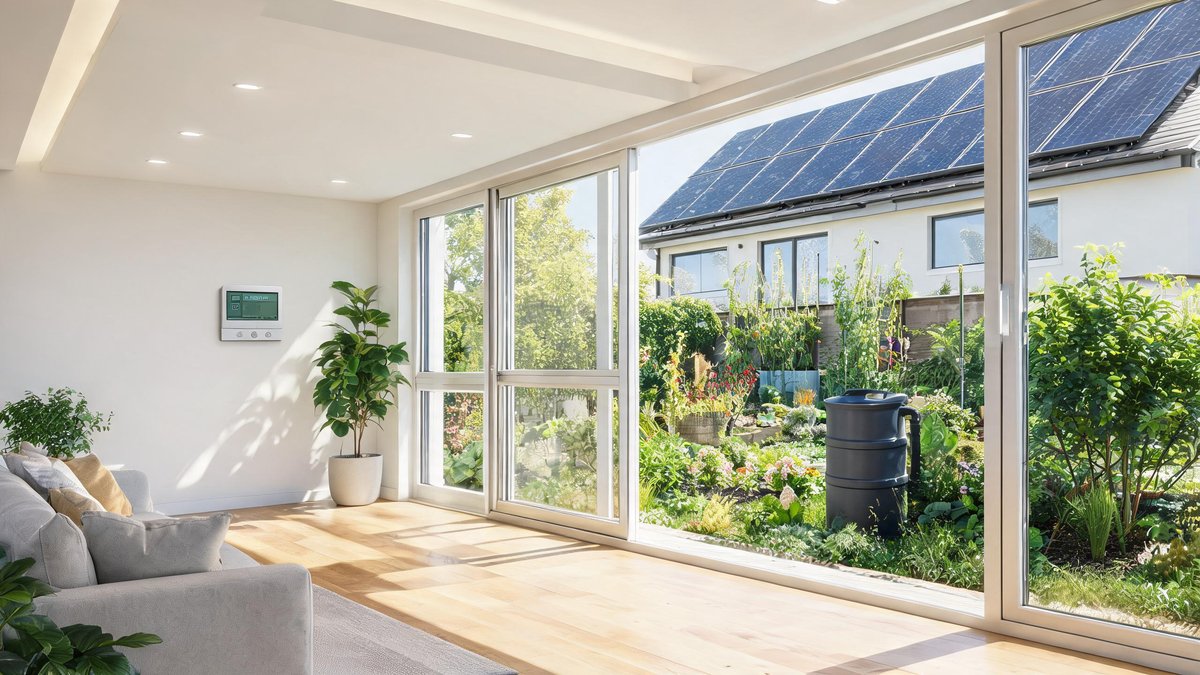
Solar panel installation costs have dropped 70 percent over the past decade, making residential solar increasingly accessible. The average 6-kilowatt residential system costs $15,000-20,000 before tax incentives, and the federal solar tax credit covers 26 percent of installation costs through 2032. Most systems pay for themselves within 7-10 years and continue generating free electricity for 25-30 years.
Net metering policies in most states allow homeowners to sell excess electricity back to the grid, further accelerating payback periods. Solar panels also increase home value, with studies showing a 3-4 percent premium for homes with solar installations. Battery storage systems like the Tesla Powerwall allow homeowners to store excess daytime generation for nighttime use, providing backup power during outages.
For homeowners not ready for full solar installation, community solar programs offer an alternative. These programs allow you to subscribe to a share of a local solar farm and receive credits on your electricity bill without installing panels on your roof. Small-scale renewable options like solar water heaters and heat pump water heaters also provide meaningful energy savings at a fraction of the cost of full solar systems.
Frequently Asked Questions
Which energy upgrade saves the most money?
LED lighting offers the fastest payback, typically recouping its cost within 6-12 months through reduced electricity bills. They use 75 percent less energy than incandescent bulbs and last 25 times longer.